
Buying Property in Bali: The Complete 2026 Guide

Buying property in Bali in 2026 takes 4 to 12 weeks for existing properties and 16 to 18 months for off-plan builds. Foreign investors access the market through three legal structures: leasehold, Hak Pakai, or PT PMA. Entry prices start near $180,000 for inland villas. Canggu and Uluwatu mid-range villas run $300,000 to $600,000. Luxury properties exceed $700,000. Investland Bali has closed over 120M EUR for 100+ international investors.

Is Buying Property in Bali Worth It in 2026?
The short answer is yes, for investors who understand the market and structure their purchase correctly. The Bali property market entered 2026 in a consolidation phase, not a speculation phase. That is good news for disciplined buyers.
Median sold prices held steady at $299,000 through Q3 2025. Rental occupancy peaked at 64.7% in July, outperforming every 2024 data point. Bali welcomed 6.94 million foreign tourists in 2025, up 9.7% year on year. Indonesia targets 6.63 million in 2026 with the tourism economy reorienting toward Asia-Pacific source markets.
From Investland Bali's completed portfolio, the average capital appreciation during the build phase runs 20 to 25%. Net rental yields on completed stabilised properties start at 10% under professional management. These are delivered numbers across 120M+ EUR in closed transactions, not marketing projections.
The case for buying in 2026 rests on three facts. Supply discipline has returned after the post-pandemic overbuild. Demand continues climbing from diversified Asia-Pacific source markets. Infrastructure investment is accelerating, with the Bali airport expansion lifting capacity from 24 million to 32 million passengers within 3 to 4 years, and a long-term pathway to 42 million. For a full market breakdown, see our Bali Real Estate Market Report.
The case against buying unprepared is equally clear. Enforcement of short-term rental compliance tightened with the March 2026 deadline. Roughly 40% of existing rental properties were non-compliant going into the deadline. Legacy land certificates such as Girik became invalid in February 2026 under PP 18/2021. Buyers who skip due diligence are facing exits from the market, not entries.
Bottom line: Bali property is worth buying in 2026 if you pick the right area, the right structure, and the right team. If any of those three fail, the market will punish the mistake.
Where to Buy: The Five Investment Zones
Area selection drives returns more than any other decision. The Canggu corridor holds the highest transaction volume. Uluwatu and Nusa Dua deliver the highest nightly rates. Ubud and Sanur offer the best value per square metre. Each zone rewards a different investor profile.
Quick Comparison
| Area | Avg Entry Price | Avg Mid-Range | Luxury | Rental Yield | Best For |
|---|---|---|---|---|---|
| Canggu and Berawa | $250,000 | $400,000 to $550,000 | $700,000+ | 9 to 11% | Digital nomads, lifestyle buyers, portfolio investors |
| Uluwatu and Nusa Dua | $280,000 | $400,000 to $600,000 | $800,000+ | 11 to 13% | Premium short-term rentals, luxury buyers |
| Ubud | $180,000 | $300,000 to $450,000 | $600,000+ | 8 to 10% | Wellness retreats, long-stay rentals |
| Sanur | $200,000 | $350,000 to $500,000 | $700,000+ | 8 to 9% | Family investors, residential buyers |
| Seminyak | $350,000 | $500,000 to $700,000 | $900,000+ | 9 to 11% | Boutique hospitality, commercial rentals |
Source: Investland Bali portfolio data and REID Q3 2025 market data, current as of April 2026.
Canggu and Berawa
Canggu holds the largest share of all Bali property transactions at 33.5% of sales volume in Q3 2025. The area attracts digital nomads, remote workers, and lifestyle buyers from Australia, Europe, and Singapore. Liquidity is strong for both buying and exit. Villas dominate supply at 87% of listings.
Median asking prices for freehold-equivalent villas sit near $471,000. Entry-level leasehold options start around $250,000 in the adjacent Pererenan and Tumbak Bayuh pockets. The Canggu brand commands a price premium. It also delivers the deepest pool of guests, tenants, and future buyers.
Uluwatu and Nusa Dua
The Uluwatu corridor leads Bali in average daily rates and is growing at 13% year on year. One-bedroom units in the area hit 57% occupancy, the highest on the island. Luxury developments, cliffside villas, and premium resort-adjacent properties define the market.
Median three-bedroom villa asking prices sit near $369,000, roughly 20% below Canggu equivalents. Land is 30 to 40% cheaper on a per-square-metre basis. The delta makes Uluwatu one of the strongest yield plays in 2026 for investors who can accept slightly thinner buyer liquidity compared to Canggu.
Ubud
Ubud attracts wellness travellers, long-stay guests, and buyers seeking distance from the south coast. Entry prices are the lowest of the five zones. Rental yields run 8 to 10%, slightly below the coastal premiums. The area suits investors with a retreat, wellness, or long-term rental thesis.
Sanur
Sanur is emerging as a family-friendly investment zone. Infrastructure is improving with the new cruise terminal and the Mangupura-Sanur-Nusa Penida ferry network. Competition is lighter than Canggu or Seminyak. The buyer pool is smaller but more stable.
Seminyak
Seminyak remains the established tourism hub with the highest foot traffic and the strongest brand recognition among international travellers. Entry prices are 30 to 50% above Canggu. The area rewards boutique hospitality operators and commercial-grade short-term rental strategies. It punishes undercapitalised lifestyle buyers who misread the cost base.
For a fuller area-by-area walkthrough with lifestyle and yield overlays, read Which Region of Bali Reflects Your Lifestyle?.
What Type of Property Should You Buy?
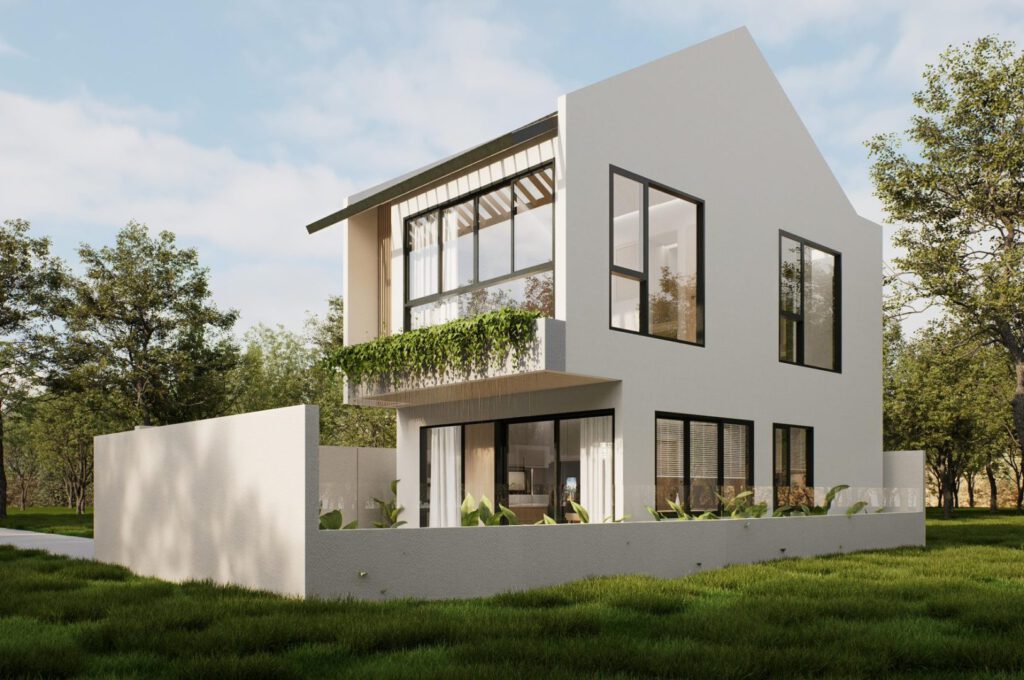
The property-type decision sits alongside the area decision. Each type carries a different risk, yield, and management profile.
Villas
Villas dominate the Bali market. They account for 87% of all supply and the majority of foreign-investor purchases. Two and three-bedroom layouts carried nearly 60% of all sales in 2025. Villas deliver the highest rental yields, the strongest capital appreciation, and the broadest buyer pool on exit.
Best for: Portfolio investors, lifestyle buyers, short-term rental operators.
Price range: $250,000 entry to $1.5M+ luxury, depending on area and size.
Apartments and Condotels
Apartments hold 13% of supply. They suit investors who want a lower price point, professional building management, and minimal personal oversight. Yields are typically 1 to 2 percentage points below comparable villas, but the operational simplicity is real.
Best for: First-time investors, crypto entrepreneurs diversifying into real estate, buyers with a hands-off thesis.
Price range: $120,000 to $400,000.
Land
Buying land to build on is the highest-risk, highest-reward path. Done right, it unlocks 20 to 25% capital appreciation during the build phase. Done wrong, it generates zoning disputes, permit delays, and cost overruns.
Best for: Villa builders, investors working with integrated build teams, experienced buyers.
Price range: Canggu land runs IDR 9 to 14 million per square metre ($530 to $825). Uluwatu land runs IDR 5 to 8 million per square metre ($295 to $470).
Off-Plan vs Resale
Off-plan properties listed as 38% of Q3 2025 supply. They deliver the biggest capital appreciation opportunity because buyers capture the 20 to 25% developer margin during construction. They also carry construction and developer-execution risk. Only buy off-plan from teams with a completed delivery record.
Resale properties carry less execution risk and deliver rental income from day one. They trade at a price premium for that certainty. The right choice depends on your capital deployment timeline and risk tolerance.
For a decision framework, read our guide on understanding land zones in Bali before buying undeveloped land.
How Much Does It Cost to Buy Property in Bali?
The total cost of buying property in Bali includes the headline price, transaction taxes, legal fees, and structure setup. Plan for the full stack, not just the sticker.
Headline Price by Property Type
| Property Type | Entry | Mid-Range | Luxury |
|---|---|---|---|
| 1-bedroom villa | $180,000 | $250,000 to $350,000 | $450,000+ |
| 2-bedroom villa | $250,000 | $350,000 to $550,000 | $700,000+ |
| 3-bedroom villa | $350,000 | $500,000 to $750,000 | $1,000,000+ |
| Apartment | $120,000 | $200,000 to $300,000 | $400,000+ |
| Land (per are, 100 m²) | $30,000 | $50,000 to $80,000 | $100,000+ |
Investland Bali portfolio data, April 2026. Pricing varies by area, title type, and build quality.
Transaction Costs
On top of the purchase price, budget 8 to 12% for transaction costs. The exact number depends on the structure you choose.
| Cost Item | Leasehold | Hak Pakai | PT PMA (HGB) |
|---|---|---|---|
| Buyer transfer tax (BPHTB) | Typically exempt | 5% of declared value | 5% of declared value |
| Seller tax (PPh) | Paid by lessor (10% of declared lease value) | 2.5% (paid by seller) | 2.5% (paid by seller) |
| Notary and PPAT fees | 1% of value | 1% of value | 1% of value |
| Legal structure setup | None | None | $3,000 to $8,000 |
| Due diligence (title, zoning, physical) | $1,500 to $3,500 | $1,500 to $3,500 | $2,000 to $4,000 |
| Translation and power of attorney | $500 to $1,000 | $500 to $1,000 | $500 to $1,500 |
For a PT PMA acquisition, the total acquisition cost is the headline price plus 8 to 12%. A $400,000 villa closes at roughly $432,000 to $448,000 all-in.
Example: $400,000 PT PMA Villa Purchase
| Item | Amount |
|---|---|
| Purchase price | $400,000 |
| BPHTB (5%) | $20,000 |
| Notary and PPAT (1%) | $4,000 |
| PT PMA setup | $5,000 |
| Due diligence | $3,000 |
| Translation and POA | $1,000 |
| Total acquisition cost | $433,000 |
This is what "buying property in Bali" actually costs on a clean, legally structured transaction. Investors who see only the headline price are running incomplete models.
The Legal Structure: How Foreigners Actually Own Property
Indonesian law prohibits foreign nationals from holding freehold land (Hak Milik) directly. That restriction is constitutional and is not changing. But foreign investors have three fully legal pathways to acquire, develop, and profit from Bali property.
Leasehold (Hak Sewa)
A fixed-term lease agreement with the landowner, typically 25 to 30 years with extension options. Simple, fast, and widely used. No residency permit required. Best for lifestyle buyers and medium-term investors.
Hak Pakai (Right to Use)
A government-issued right to use land for residential purposes, registered in your personal name. Initial 30-year term, extendable to 80 years total. Requires a valid KITAS or KITAP residency permit. Best for individual residential buyers.
PT PMA (Foreign-Owned Indonesian Company)
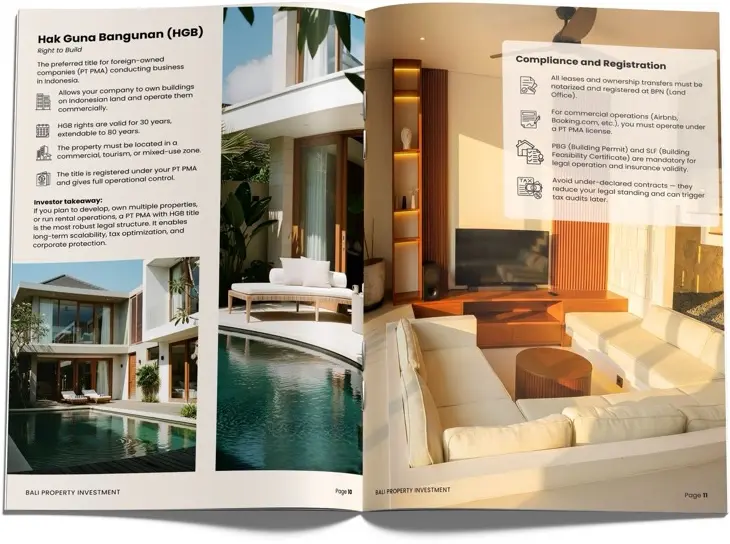
A 100%-foreign-owned Indonesian limited liability company that holds property under Right to Build (HGB) or Right to Use title. The strongest legal position and the most flexible structure for rental businesses, hospitality, or multi-property portfolios. Best for portfolio investors and anyone running a rental business.
Under BKPM Regulation 5/2025, the minimum paid-up capital at PT PMA incorporation was reduced from IDR 10 billion to IDR 2.5 billion (approximately $150,000 to $170,000). The total investment plan must still exceed IDR 10 billion. This change frees up capital for the property itself.
One warning: nominee arrangements, where an Indonesian citizen holds freehold title on your behalf, are illegal under Indonesian law and legally unenforceable. An estimated 10,500 properties in Bali are held through nominee structures, representing roughly $10.4 billion in at-risk assets. Do not go this route.
For the full legal breakdown including tax treatment and structure comparison, read our pillar guide: How to Buy Property in Bali as a Foreigner.
The 12-Step Buying Process
The mechanics of buying property in Bali follow a predictable sequence. Investland Bali has run this process 100+ times for international investors. Here is what happens, in order.
Step 1: Define your investment thesis. Rental income, lifestyle use, capital appreciation, or a combination. The answer determines area, property type, and structure.
Step 2: Set a realistic budget. Headline price plus 10 to 12% for transaction costs. Include 6 to 12 months of operating reserve for rental properties.
Step 3: Choose your legal structure. Leasehold, Hak Pakai, or PT PMA. If you are running a rental business or buying over $400,000, PT PMA is usually the right choice.
Step 4: Start the PT PMA formation (if applicable). PT PMA registration runs in parallel with property search. Timeline: 4 to 8 weeks through the OSS system.
Step 5: Property search and shortlist. Work with a vetted team that has deal flow, not agents chasing listings. Shortlist 3 to 5 properties that match your thesis.
Step 6: Initial site visit or virtual walkthrough. Every shortlisted property gets a physical inspection and a location review. Remote buyers receive full video walkthroughs, drone footage, and zoning overlays.
Step 7: Price negotiation and Letter of Intent. Negotiate price and terms in writing. The LOI locks the headline figure. Do not pay anything until the LOI is signed.
Step 8: Deposit and notary escrow. Pay a 10% deposit to the notary's escrow account. This secures the property and opens the due diligence window. Deposits held by notary escrow are recoverable if due diligence fails.
Step 9: Due diligence. The most important step. Title verification at BPN, zoning confirmation, permit review, physical and structural inspection, and KKPR (Spatial Usage Confirmation) check. A qualified lawyer and builder handle this. Timeline: 2 to 4 weeks.
Step 10: Sale and Purchase Agreement (AJB). Sign the deed in front of the PPAT (Land Deed Officer). Remote buyers sign through power of attorney.
Step 11: Taxes and registration. Pay BPHTB (5%), notary fees, and registration costs. The title is registered with BPN in your name (Hak Pakai) or your PT PMA's name (HGB).
Step 12: Handover and handoff to operations. Receive the keys. Hand the property to a professional management service for rental operations or move into lifestyle-use mode.
Buying Timeline: Week by Week
Timelines vary by legal structure and property type. Here is what a typical PT PMA villa purchase looks like in practice.
| Stage | Weeks | Key Activities |
|---|---|---|
| Strategy | Week 1 | Investment thesis, budget, structure selection |
| PT PMA formation | Weeks 1 to 6 | Company registration through OSS, capital deposit |
| Property search | Weeks 2 to 4 | Shortlist, site visits, initial review |
| LOI and deposit | Week 4 | Negotiation, LOI signed, 10% deposit to notary escrow |
| Due diligence | Weeks 4 to 7 | Title, zoning, permits, physical inspection |
| AJB signing | Weeks 7 to 8 | Deed signed, taxes paid, title registered |
| Handover | Week 8 | Keys received, operations handoff |
Total: Approximately 4 to 12 weeks for existing properties. Leasehold moves faster (1 to 4 weeks). Off-plan adds 12 to 18 months of construction time.
From Investland Bali's portfolio, the median time from first strategy call to keys in hand is 6 to 8 weeks for PT PMA acquisitions. The full journey including construction for an off-plan villa averages 16 to 18 months.
Ongoing Costs After You Buy
Buying is only the first cost. Owning a property in Bali carries recurring expenses that every investor should model before committing. Under-budgeting ongoing costs is one of the most common mistakes in the market.
| Cost | Annual Amount | Notes |
|---|---|---|
| PBB (land and building tax) | 0.1 to 0.3% of declared value | Paid annually to local authority |
| PT PMA compliance | $1,500 to $3,000 | Annual reports, tax filings, corporate secretary |
| Property management (full service) | 15 to 25% of gross rental | Pellago's standard range |
| Utilities and maintenance (vacant) | $200 to $500 per month | Villa pools, gardens, cleaning |
| Insurance | 0.2 to 0.5% of replacement cost | Building, contents, liability |
| Short-term rental licensing | $500 to $1,500 | Pondok Wisata permit and compliance |
For a full ongoing-cost model tied to area and property type, factor these in against the rental income projection. For cost-of-living context, see our guide on cost of living in Bali.
Common Pitfalls and How to Avoid Them
Six pitfalls trap most first-time buyers. Avoid all six and you are in the top decile of informed investors.
Skipping due diligence to move fast. A clean-looking property can have title disputes, zoning violations, or unpermitted construction. Always verify. Always inspect. Always budget 2 to 4 weeks for the process.
Using a nominee structure. It is illegal and unenforceable. The March 2026 enforcement tightening is real. Pick one of the three legal structures instead.
Buying Girik or legacy-certificate land. Under PP 18/2021, legacy certificates became invalid in February 2026. The property cannot be legally transferred. Verify the certificate status before signing anything.
Missing zoning rules. Building a short-term rental on land zoned residential or agricultural puts the entire investment at risk. KKPR verification is mandatory before committing capital.
Underestimating ongoing costs. PBB, PT PMA compliance, management fees, and maintenance add up. Model the full five-year cost before you buy.
Working with inexperienced agents or lawyers. Not all Bali agents are licensed. Not all lawyers specialise in foreign transactions. Work with teams that have a documented track record.
For a deeper breakdown, read 7 Mistakes to Avoid When Investing in Bali Real Estate.
Why Work with Investland Bali
Investland Bali Properties is not a brokerage. It is a four-brand ecosystem built for international investors who want one team covering the full investment lifecycle.
Investland Bali handles investment strategy, deal sourcing, and PT PMA setup. Constructland manages construction and build delivery. Luup.design provides architecture and interior design. Pellago runs property management and rental operations. One team, four brands, zero middlemen.
Delivered results, not projections. Investland Bali has closed over 120M EUR in transactions across 100+ international investors in 15+ countries. 60+ units developed. Net rental yields from 10%. Capital appreciation of 20 to 25% during the construction phase. Multiple sold-out off-plan projects. All five-star Google reviews.
Legal certainty. Every transaction is structured through proper legal channels. Every property passes independent due diligence. Every fee is disclosed upfront. No nominee arrangements. No grey zones.
Remote investment capability. The entire process, from strategy call to legal setup to construction oversight to ongoing rental management, can be completed without travelling to Bali. Power of attorney arrangements handle signing. Most Investland Bali clients invest and earn from their home countries.
Ready to Start Buying Property in Bali?
Every good investment starts with a clear plan. Book a free investment call with the Investland Bali team. We will walk through your goals, budget, and preferred area, and map out a structure that fits your situation.
Book a Free Investment Call. 30 minutes, no obligation, straight answers from a team that has closed 120M+ EUR for international investors.